Ash's Cabin

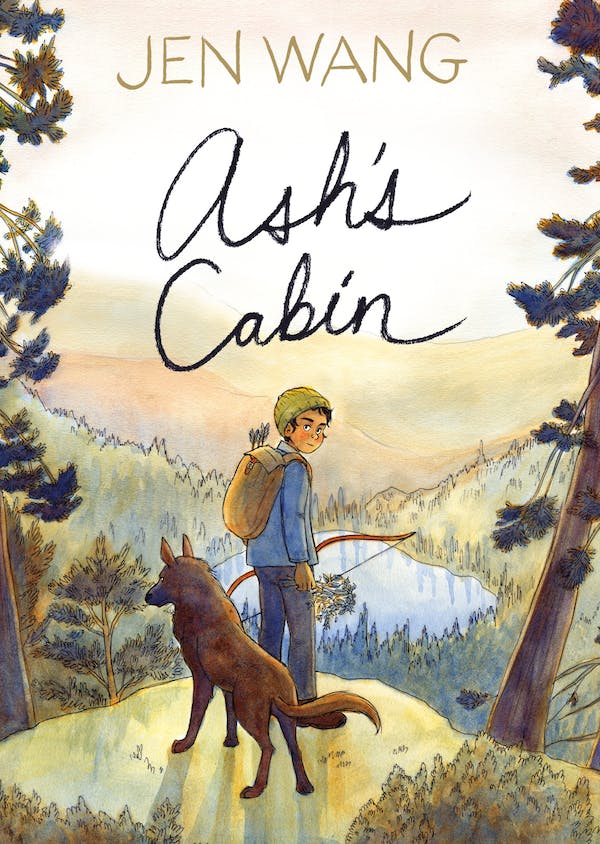
I picked up a copy Ash's Cabin after recognizing Jen Wang's name from other phenomenal graphic novels, like The Prince and the Dressmaker, Stargazing, and In Real Life. Wang's books often focus on characters who are in tension between two worlds. A prince who has a secret life as a female fashion icon, a girl who believes she belongs in another world beyond the stars, or two gamers from different circumstances who virtually connect from across the world. Ash's Cabin adds to this trend with a main character seeking to deal with loneliness and gain independence by running away to the wilderness.
In the book, the main character Ash initially feels disconnected from others. Ash feels a strong connection with nature and cherishes their annual vacation to their extended family's ranch. However, other teens don't share Ash's values and Ash's family leaves them out of big decisions. This feeling of isolation is further signaled by the frequent use of Ash's deadname, which is consistently blanked out when used in dialogue. It is unclear how aware Ash's family is about their gender identity, and it is evident that their relationship is strained.
Ash turns this loneliness into a drive to be alone and independent. Initially Ash takes on a project to find their grandpa's long lost cabin, and spends their time engaging in research about wildlife survival skills and the land. However, eventually the reader realizes that Ash is planning to leave society and live on their own in the wild, which casts the preparations into a more worrying light. After running away from their family's ranch with their dog, Ash puts their knowledge and skills to the test. Wang's beautiful illustrations show Ash's journey in and exploration of the natural world. However, Ash learns that they are more interconnected with other people than they think and being alone isn't the solution they expected it to be.
This book has a lot to say about mental health, unhealthy coping mechanisms, and the importance of connection with others. It also explores climate anxiety, as Ash's escape into the wild is in part fueled by their anger about climate change and their desire to escape into nature. The climax of the book demonstrates how isolation is not the way to deal with climate change or climate anxiety. The book ends with Ash finding better ways of coping, including seeking professional help, rebuilding relationships, connecting with like-minded students, and pursuing group activism and advocacy. The book's main message suggests that it is easy to feel alone when the world is heavy, but we need others to find a better way forward.